Case study
Rebuilding a Tribal Museum in the Digital Realm
See how Junaluska Museum forged ahead to preserve archives and connect the Snowbird community with its heritage online.
© Eastern Band of Cherokee Indians
Organization
Junaluska Museum, Eastern Band of Cherokee Indians
Headquaters
Cherokee, North Carolina
Industry
Tribal institution
%
user adoption
months to go live
digital assets (+ rising weekly!)
Organization
The right software can help you uphold data sovereignty and share tribal collections—even without physical walls to display your artifacts.
Junaluska Museum’s mission is “to preserve Cherokee history and to protect and perpetuate Cherokee culture.” This digital-first Museum stewards the cultural heritage of the Eastern Band of Cherokee Indians (EBCI), a federally recognized tribe and sovereign nation in Cherokee, North Carolina.
During the 1800s, thousands of Cherokee peoples were systematically driven from their homeland by the US government and President Andrew Jackson. Known as the Trail of Tears, this forced relocation divided the Cherokee Nation into two groups.
EBCI includes the peoples who stayed and rebuilt within North Carolina’s Qualla Boundary, while the Cherokee Nation and Kituwah Band peoples now reside in Oklahoma.
Staff and enrolled EBCI members Angelina Jumper, Cultural Resources Supervisor, Kayleen Cree Rockwood, Cultural Coordinator, and Jeremy Brown, Operations Manager, shared what sparked the digital transformation at Junaluska Museum—and what comes next.
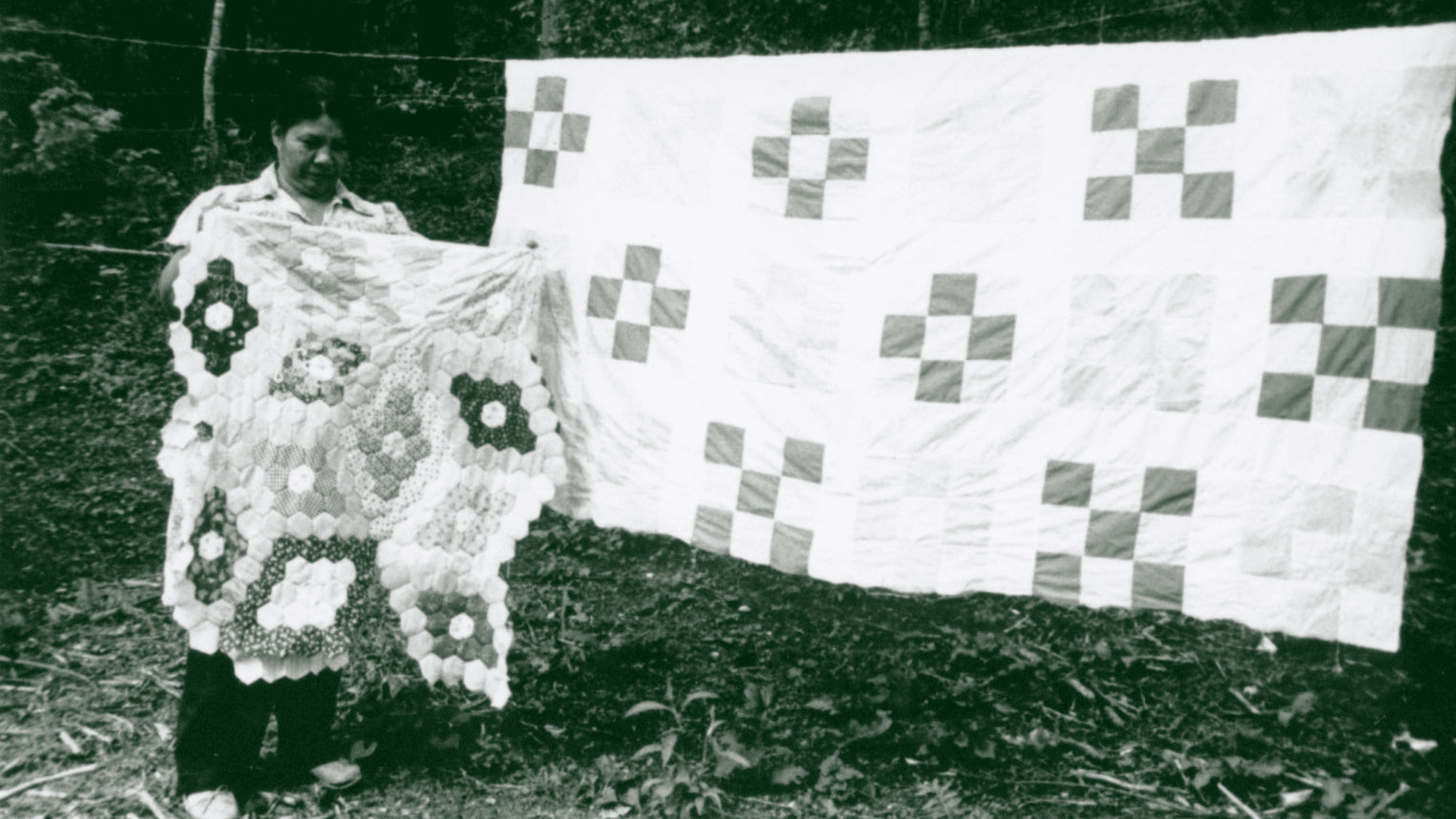
Ella Bird Hanging Her Quilts, Fading Voices © Junaluska Museum, Eastern Band of Cherokee Indians
Objectives
Several catalyzing events inspired Junaluska Museum to digitally preserve their collections. This effort later expanded to include sourcing and digitizing community materials—including photos, audio recordings, and videos.
In 2015, a tree fell on the Museum. The gallery space was destroyed, and physical collections were packed up into plastic boxes and filing cabinets. Later, there was also a fire in the building where staff relocated, and the satellite office would move several times.
A devastating ransomware attack impacted EBCI in 2019. Significant tribal data was lost, including a 15-year project of audio and video recordings that featured community members speaking Cherokee.
Despite this incredible adversity, the team accumulated a wide range of digital assets. But using SharePoint to manage these collections and their data was holding staff back.
Though the platform worked well for internal collaboration, staff couldn’t distribute materials outside the community, which was a major barrier. And because SharePoint isn’t purpose-built for museums, cataloguing metadata was also a struggle.
Junaluska Museum began looking for a digital asset management system (DAMS) that could help their small team preserve, catalogue, and make collections accessible—all while upholding Indigenous data sovereignty.
Finding software for tribal nations that gave staff complete authority over the Museum’s data was non-negotiable.
“Our tribal systems and IT [wanted] a platform that was ours—rather than a third-party where we were inputting our data and it went out into the ether, uncontrollable,” says Angelina. “Terentia offered that [sovereignty], and it was something we really enjoyed about their system.”
Having been in partnership with Microsoft for a few years, EBCI felt they could trust the Terentia platform, as it’s powered by Microsoft Azure. “Data within the Microsoft tenant are sovereign ground. It’s treated the same as our Qualla Boundary and is given the same permissions and accesses,” explains Jeremy.
“The decision for us was in the control and ownership of the data. Other museums that we’ve dealt with wanted us to partner with them, and then we’d be asking for permission to use our data,” he says. “And that does not sit well with the EBCI. That was not going to happen.”
Leadership has peace of mind knowing that the Eastern Band of Cherokee Indians’ data is protected from a legal and sovereign standpoint. And not even Terentia or Microsoft can access the tribe’s data without their permission.
In addition to DAM functionality, Junaluska Museum wanted an online space to help tribal members connect with heritage. Staff’s main goal is to perpetuate community stories and history—and creating an online portal to involve and engage members was a top priority.
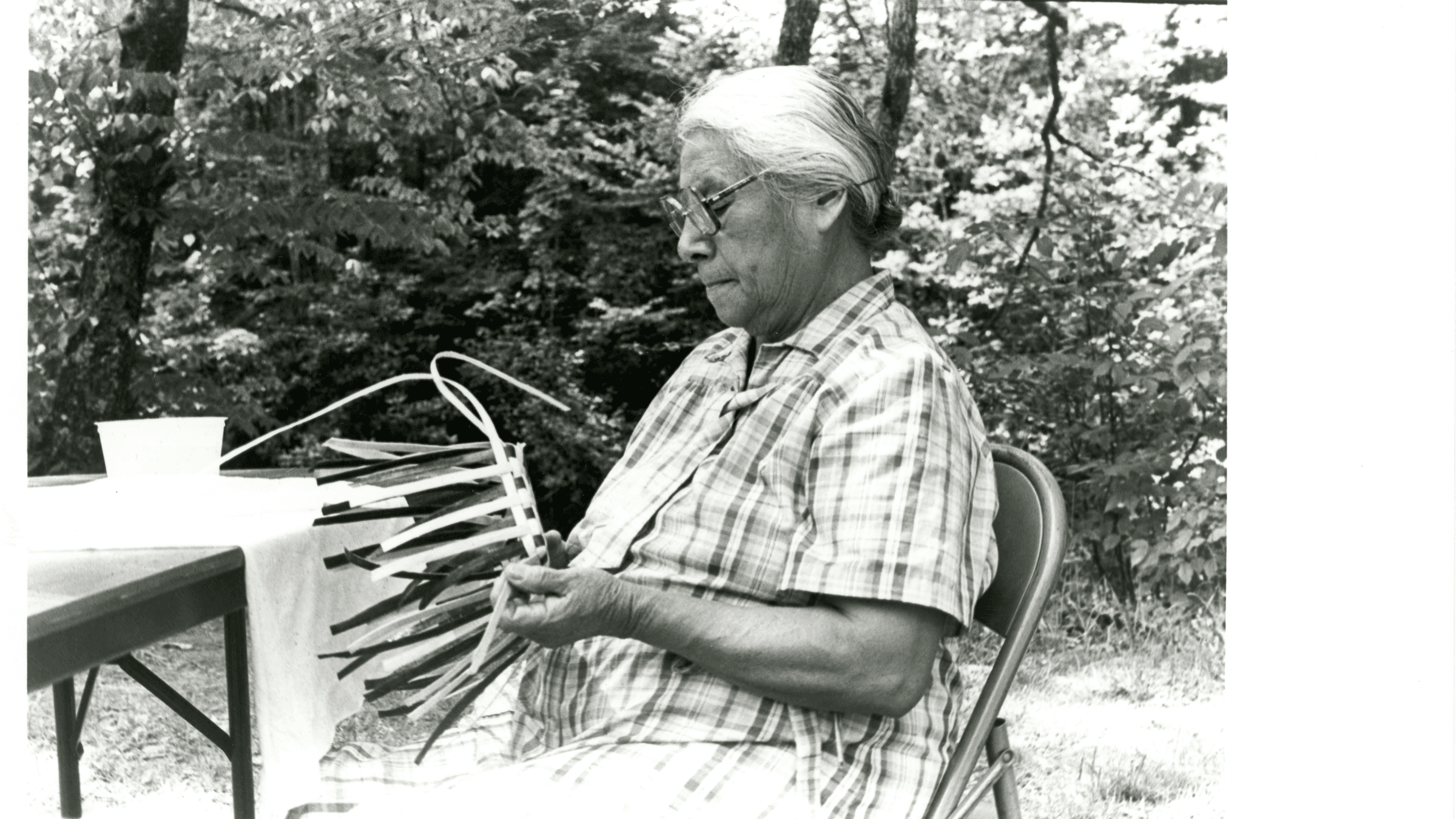
Amanda Smoker Weaving, Fading Voices © Junaluska Museum, Eastern Band of Cherokee Indians
Solution
Junaluska Museum’s digital transformation started with one ask—a secure and sovereign digital asset management system—that evolved into something much bigger.
In July 2024, Terentia visited the Snowbird Community for two days to begin implementation. During this visit, the team demoed the platform for Junaluska Museum and reviewed staff’s goals, current data, and digital assets.
Angelina shares, “It was really cool to have people come to us, because usually we have to go up to Cherokee. [Terentia] made the effort to meet with us in our offices.”
Terentia also showed EBCI the Collections Online solution, which inspired the team to imagine new possibilities. Angelina explains, “Here is this front-half portal that takes your museum even further and makes it into a real digital museum with digital collections. That was really the selling point for us.”
Staff are using the full Terentia platform—easy-to-use solutions for digital asset management, collections management, and collections engagement—to achieve their heritage preservation and community engagement goals. All while upholding complete data sovereignty.
The system empowers Junaluska Museum to reclaim stewardship of collections held by universities and institutions. By digitizing these objects and archival materials, staff can preserve and share the digital replicas on their own terms.
To build the Museum team’s expertise and comfort with the software, Terentia delivered a two-day in person training at the IT department in Cherokee. Follow-up sessions were held via Microsoft Teams to strengthen understanding and address emerging questions.
The platform’s intuitive UX meant staff could start cataloguing and managing collections immediately after training—no dedicated IT expertise was required.
In Angelina’s words, “We have the ability to store everything in a data-secure way approved by our IT team. And the front-half portion [of the platform] opens up not just the ability to store [digital assets], but to convey them.”
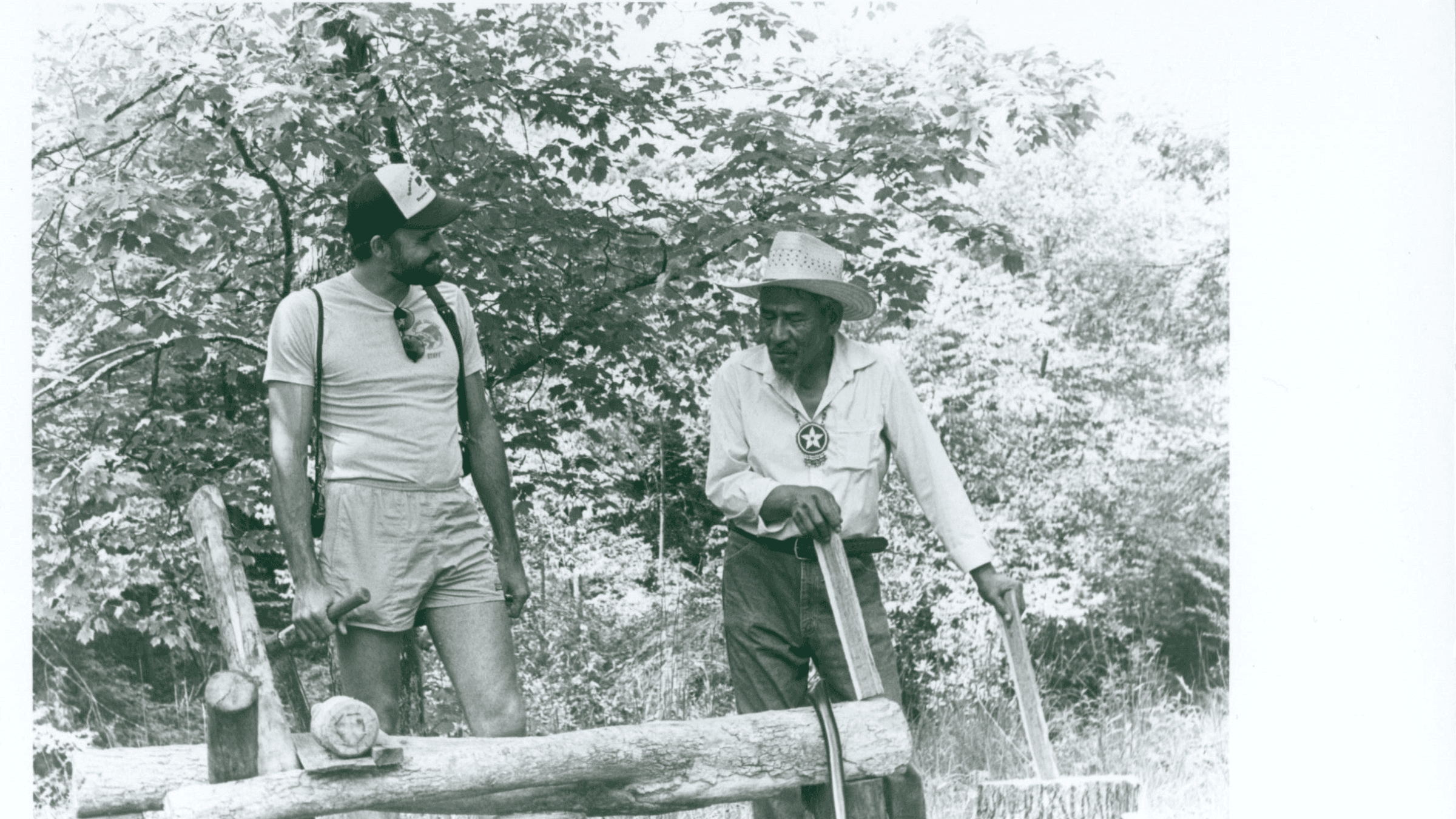
Earl Davis & Simon Calonehuskie, Fading Voices © Junaluska Museum, Eastern Band of Cherokee Indians
"Terentia really built capacity for both of us. Cree and I were able to pick the software up quickly. We’re both social scientists, not techy-type people, which really tells you how easy the platform is to use."
Angelina Jumper
Cultural Resources Supervisor
Outcomes
With Terentia, the team had soon rebuilt their EBCI collections in the digital realm.
Junaluska Museum deployed its DAMS in August 2024. The Collections Online site—which serves as the institution’s public-facing museum and “living cultural center”—went live in October 2025.
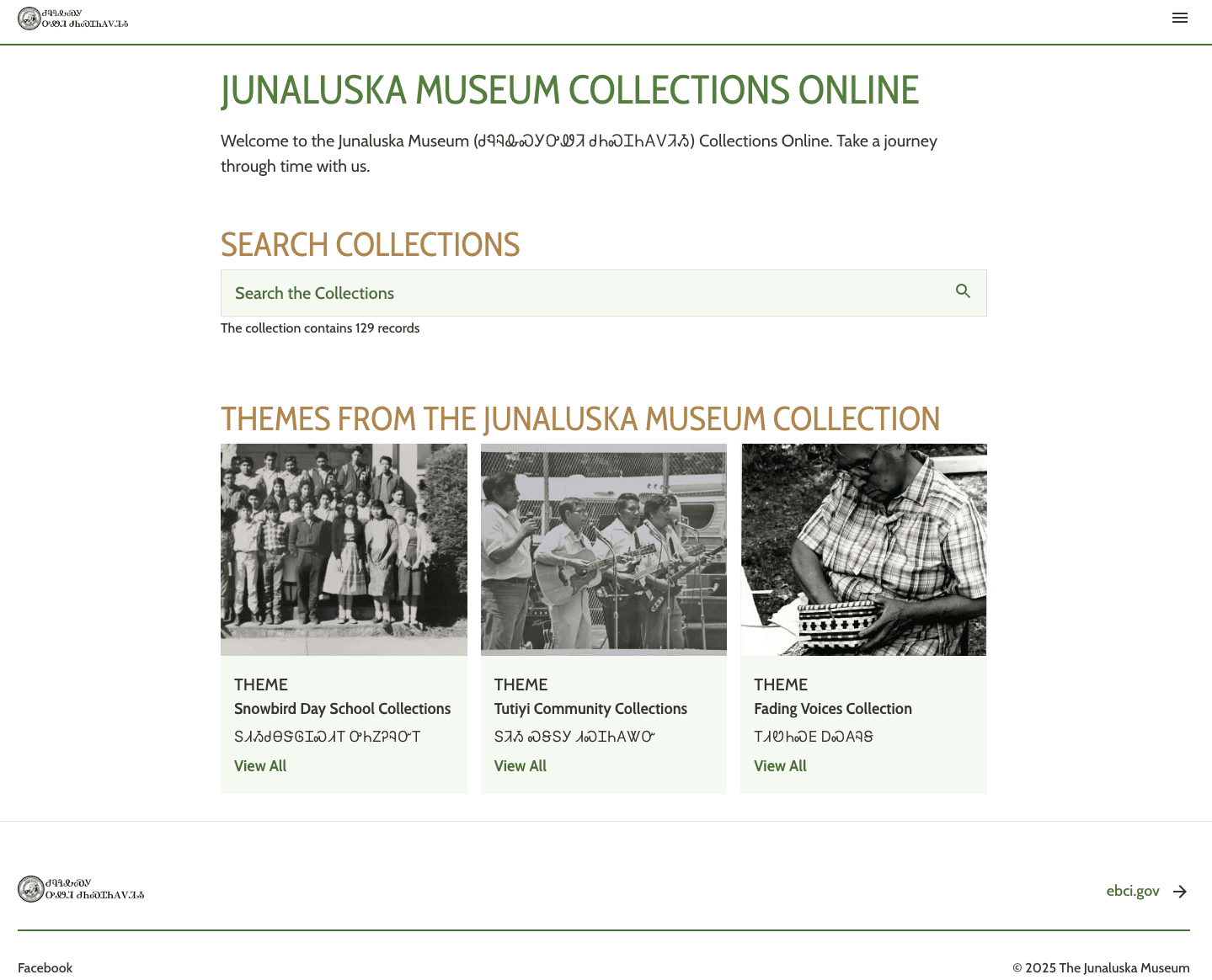
For staff, Terentia eliminated the friction experienced with SharePoint. Cataloguing metadata, organizing collections, and publishing digital assets online were suddenly possible—and even simple.
“Terentia has been really just helping us have a museum. We’re completely digital right now. It’s been the most amazing thing to have accessible records and archives, and tell a story about who we are through our own voices,” Angelina says.
“Our focus is on what the community wants to see more and how we can help reconnect people, inspiring them to be more involved and engaged with who we are.”
Cree adds that the team “wants to make sure there’s positive energy to our collections and [allow] people to feel like they’re there in that moment in time.” To achieve this goal, she’s been adding uplifting and empowering descriptions to each digital asset’s metadata.
Efforts to collect archival materials, audio, and video files from the Eastern Band of Cherokee Indians community are still underway. And each object held in the Terentia platform preserves tribal heritage for future generations.
Digitization initiatives are currently focused on the Snowbird Senior Citizens Center, since these longstanding community members have “collected things over time and been here for significant events,” as Cree explains.
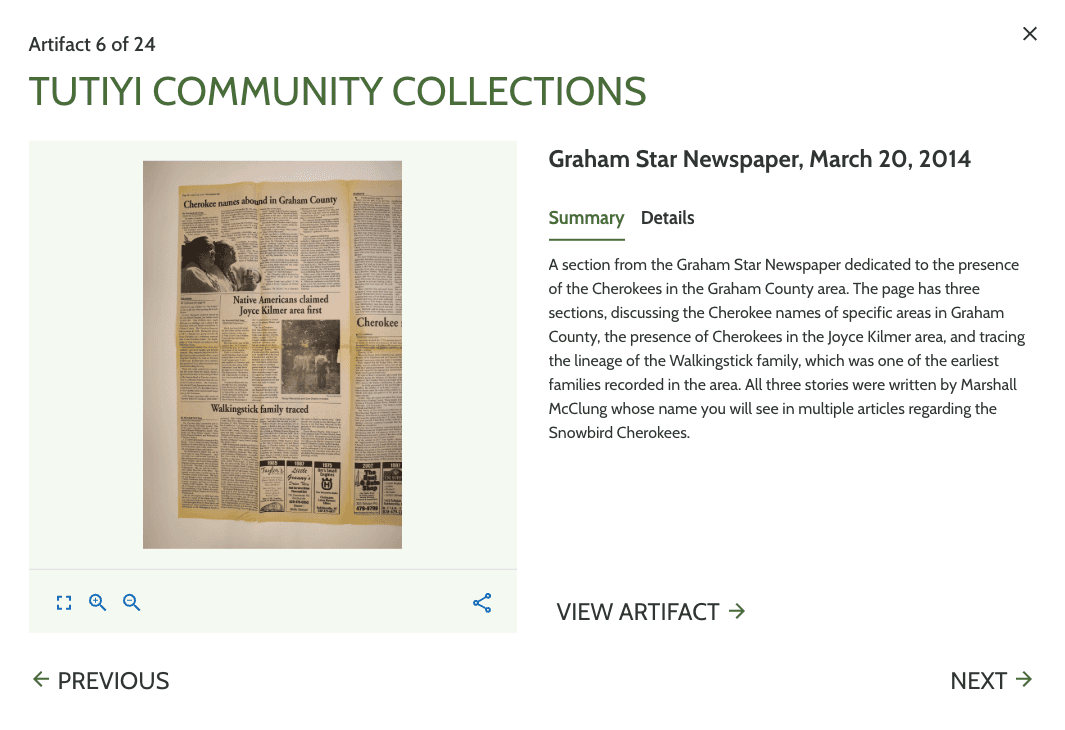
When building their virtual museum, Hailey Majewski, Product Specialist, approached the team about exploring 3D digitization. After chatting with Hailey, Angelina and Cree couldn’t wait to learn more.
Angelina shares, “Terentia asked us questions, like, What do 3D artifacts look like? What if we built a digital exhibit? What if you could walk through the museum you have in mind, but not physically have a space yet? Over the past year, we’ve been exploring that.”
In a two-day onsite training in March 2025, staff learned photogrammetry with Terentia’s support—even though as Angelina joked, “we’re not by any means tech people.”
The Museum team started out with just a smartphone and appropriate lighting to photograph objects from all angles. As their confidence grew, their skills advanced considerably.
Staff now use DSLR cameras to upload photos and create 3D models in superfine detail. These renderings preserve heritage and help community members reconnect with their roots.
For example, a basket maker could ask to see their grandmother’s basket to recreate her weaving technique and receive access to detailed 3D models, showing how particular splints were woven.

Maggie Wachacha Basket with Lid © Junaluska Museum, Eastern Band of Cherokee Indians
One surprise success story is the genealogical records the Museum has created. Terentia helped the team configure fields for object records that can connect community members to their family lineage and ancestral ties.
This data is currently stored in the DAMS, but Angelina says, “In the near future, I’m hoping we’re able to pull that [data] forward and share it with our community and researchers, because people want to know where people came from.”
Junaluska Museum appreciates how user-friendly Terentia is, and the guidance offered by team members Hailey, Jason McKenzie, Program Manager, and Neal Bilow, CEO.
When speaking about the platform, Cree says, “For the user part, it’s been great. Easy access and easy to log in and use the back half.”
“We’ve had a lot of support. If we need something, Hailey and Jason are really quick to respond,” Angelina adds.
As the Museum scales and expands its capacity, the team is excited to use Terentia to support upcoming initiatives.
Future
With user-friendly software in their toolkit, the Junaluska Museum team plans to share more community stories, expand the online collections, and explore more digital engagement possibilities.
Part of this work involves digitizing artifacts held by other institutions in the area. For example, “The Museum of the Cherokee People has an ethnographic work with tons of recordings from 10-15 Snowbird matriarchs and patriarchs,” Angelina explains.
“We’re having the people that are descendants of those individuals listen to [the recordings] and transcribe them. So I’m hoping we can bring forward some more voices from families and different experiences that they have had.”
Based on community feedback, staff plan to add in-person tour topics like the Trail of Tears, Fort Montgomery, and Tatham Gap Road to the online collections.
Creating interactive exhibits for the virtual museum is also on the agenda. Angelina and Cree want to “bring forward more of our language and traditional backgrounds in crafts, music, food, cooking—all the things that encompass who we are as Cherokee people.”
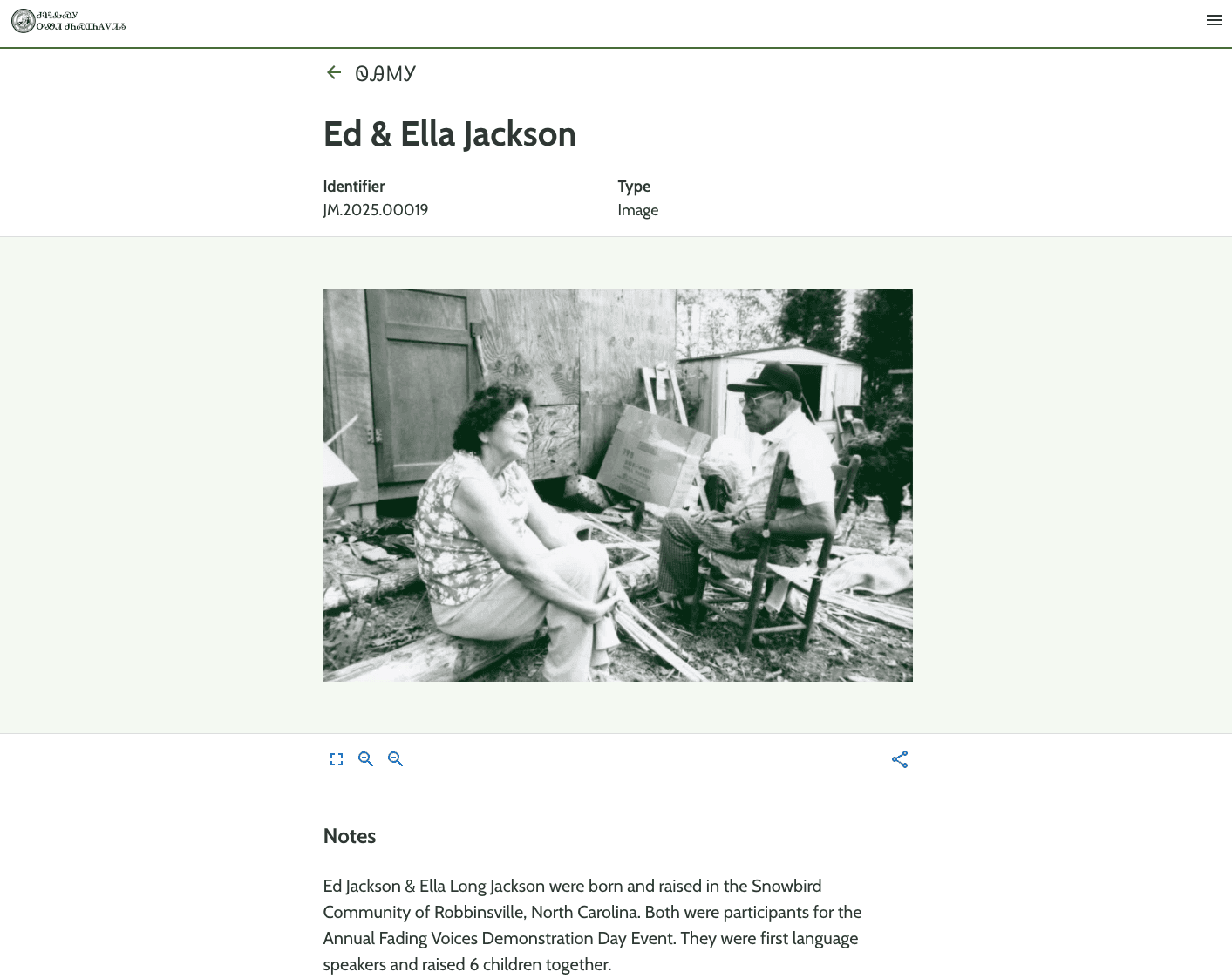
Preserving and sharing elders’ voices and stories remains central.
“We only have 130 first language speakers left—a lot of them are over the age of 60. So we’re losing a handful every year. If we can digitize as many of their voices and essence, their grandkids will be able to interact with them one day,” Angelina shares.
The Collections Online site was positively received by the community’s elders, which was “humbling and exciting” for Cree.
“My goal now is to present more of the [archival] photos we have [to the elders] and see if they can tell a story about that certain image, person, or place. With more metadata, we can give an accurate representation of that image like it deserves,” she shares.
The Eastern Band of Cherokee Indians look forward to a long-term partnership with Terentia. “10 years from now when community members ask: ‘Well, can [the platform] do this or can it do that?’ We know Terentia is going to have the ability to mold into that,” says Jeremy.
When asked to offer advice to other tribes considering Terentia, EBCI highlighted the importance of understanding the platform’s security and data sovereignty.
Jeremy recommends establishing your high value assets from day one. “[Tribes] assume somebody else has that already figured out and then we try to follow that model. That’s how your data gets leaked. Or how somebody starts a non-profit and suddenly everything you’ve trusted them with is being utilized by them.”
“Just ask deeply about all the data sovereignty provisions and things Terentia has to offer. Be transparent on what your needs are,” Angelina suggests.
Cree agrees, and adds, “Don’t be afraid to ask those hard questions, because I know there was some push back from us. Like: ‘Why should we trust you or this type of DAM system?’ Neal, Jason, and Hailey have been very transparent and open with explaining everything.”
With Terentia, Junaluska Museum has gained engaging ways to share collections with their community and solutions to preserve irreplaceable tribal heritage.
And above all else, the team is confident their data sovereignty will be maintained and respected.
"Having a lot of support has been the beauty of Terentia. Learning the software was a lot easier than we thought. We hope to have a physical building at some point. In the meantime, the platform is helping us truly meet the mark of being a museum that has accessible records, archives, and lets us tell our stories in our own words."
Angelina Jumper
Cultural Resources Supervisor
Learn more
ᏚᏘᏱ (Snowbird) Histories: Advancing the Digital Future of the Junaluska Museum
Key takeaways
Community engagement
Empowers tribal members to connect with family lineage and heritage from anywhere.
Full data sovereignty
Preserves digital assets in a secure, dedicated environment that no one can access without permission.
User-friendly platform
Went from basic training to managing hundreds of assets and launching a digital museum in months.
Want to preserve heritage and engage your community?
You can with Terentia. Reach out to learn how the platform protects cultural artifacts and connects tribal members to their legacy—while upholding full data sovereignty.