Case study
Becoming an AI-Powered Presidential Library
Follow the Theodore Roosevelt Presidential Library’s journey from early adopters to building a trusted AI digital repository
© Theodore Roosevelt Presidential Library
Organization
Headquaters
Medora, North Dakota
collections across 18 institutions
+
digital assets
+
records
Organization
Opening day may be fast approaching for the Theodore Roosevelt Presidential Library, but its team already thrives living in the future.
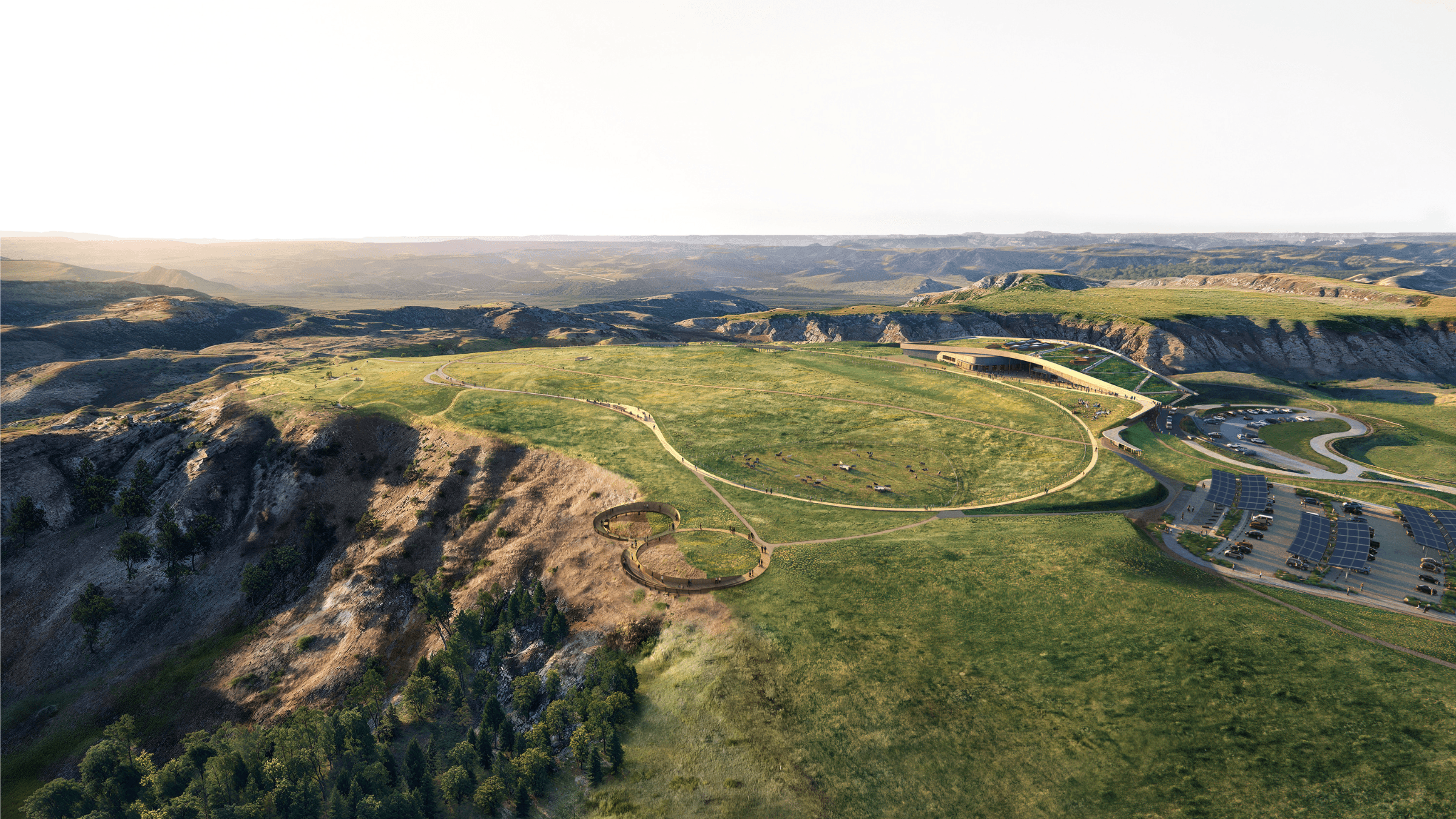
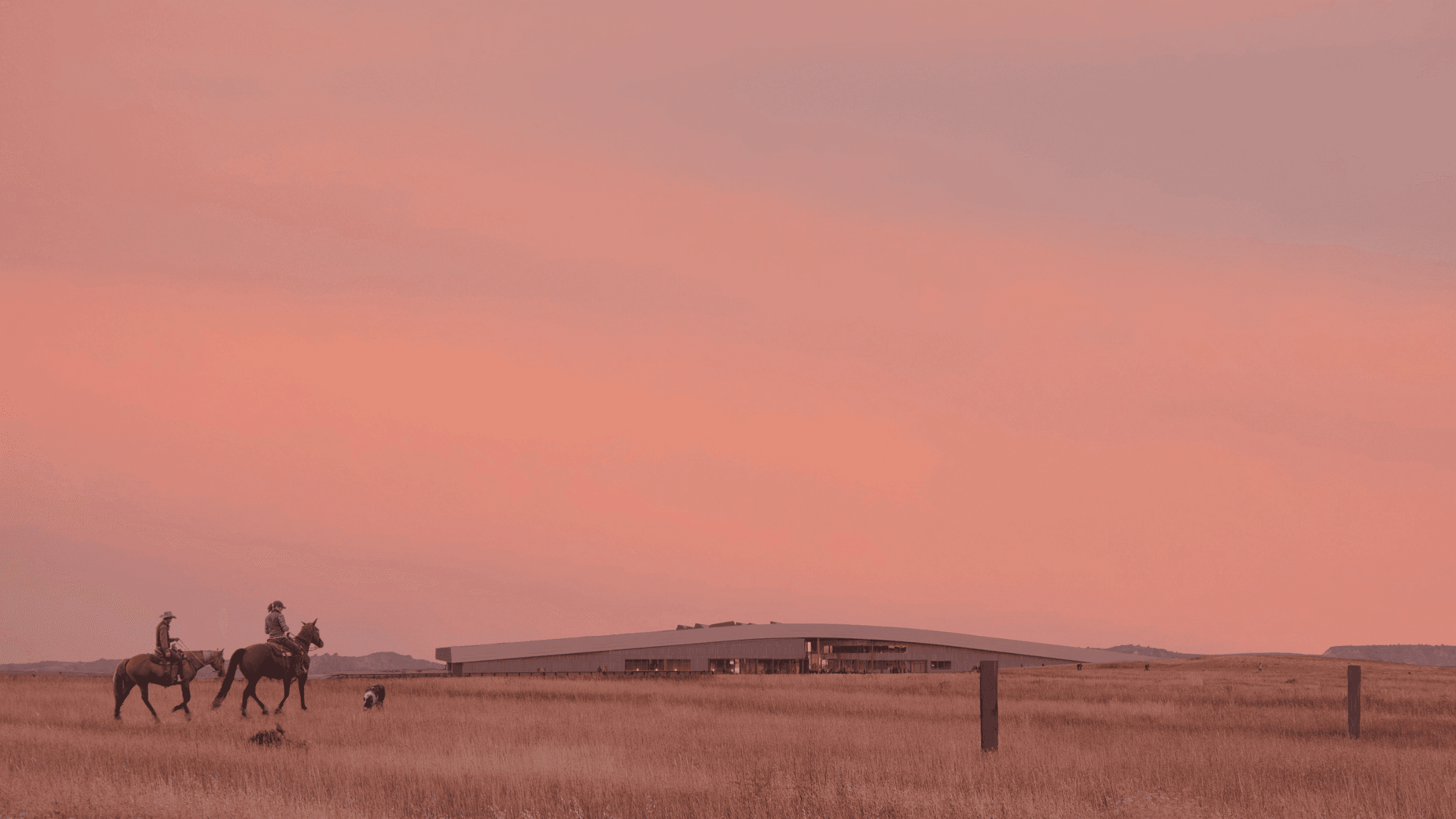
Nestled on the edge of the National Park carrying his name, a new kind of museum is being built in Medora, North Dakota, to honor America’s 26th president.
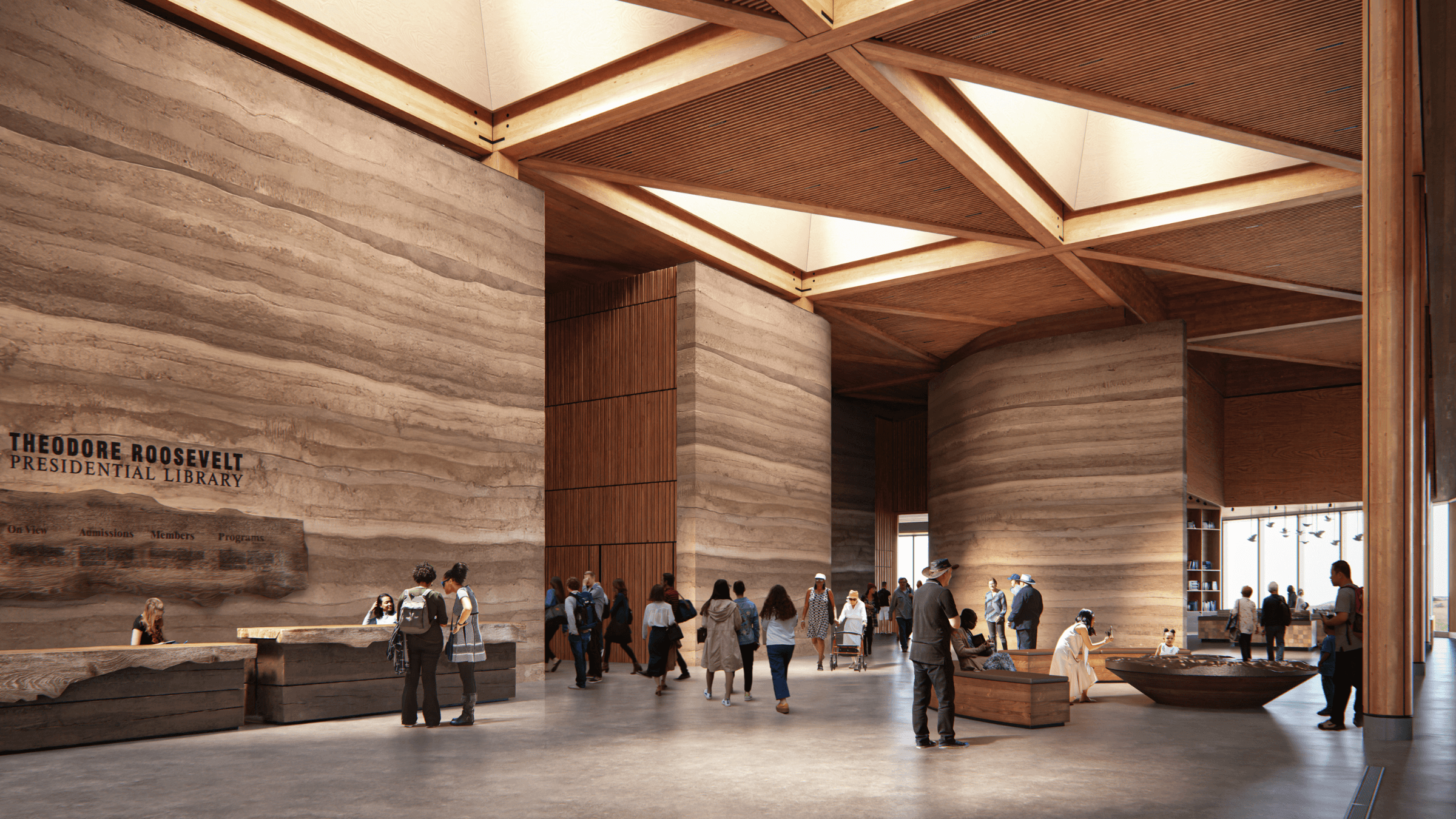
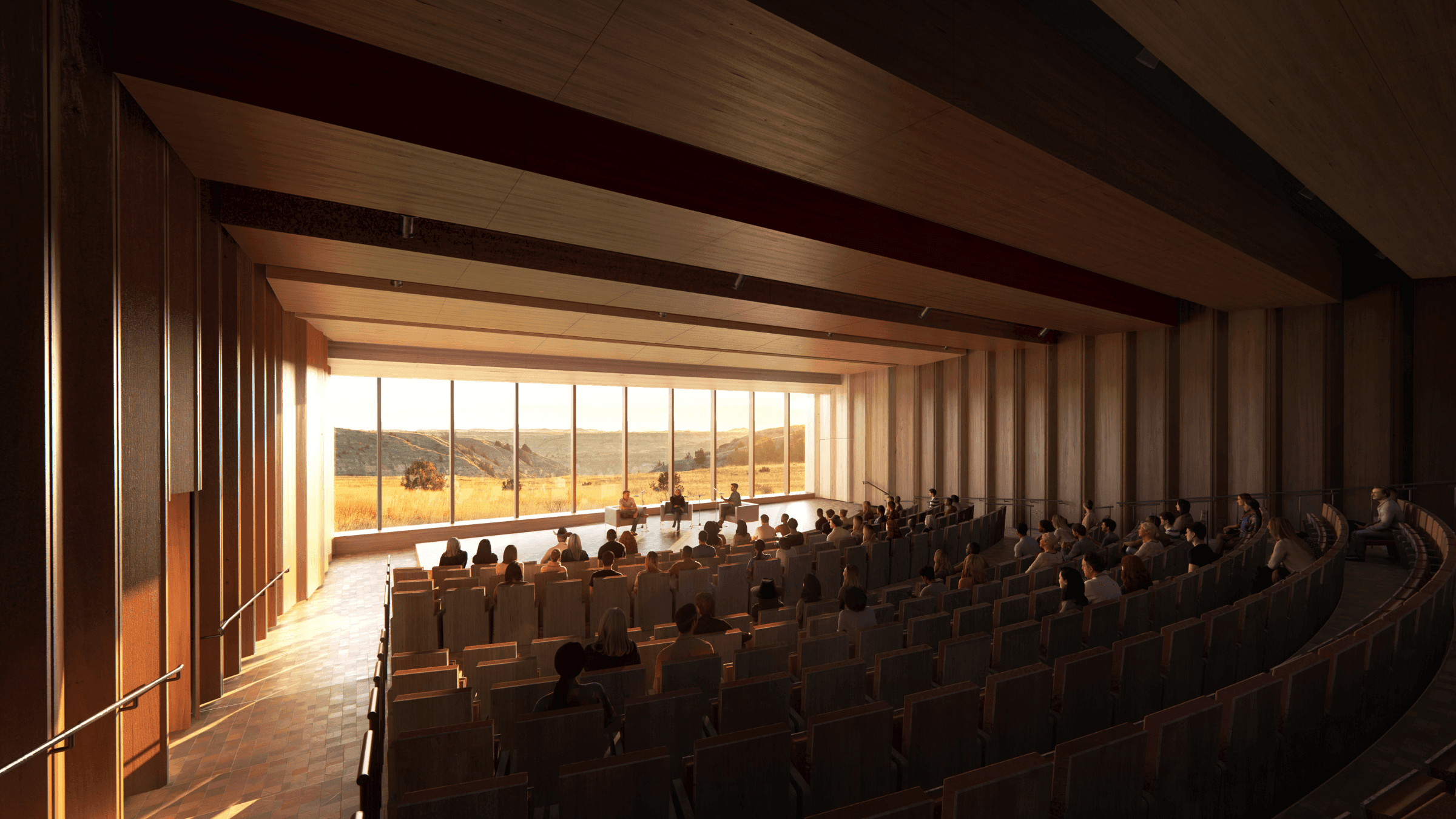
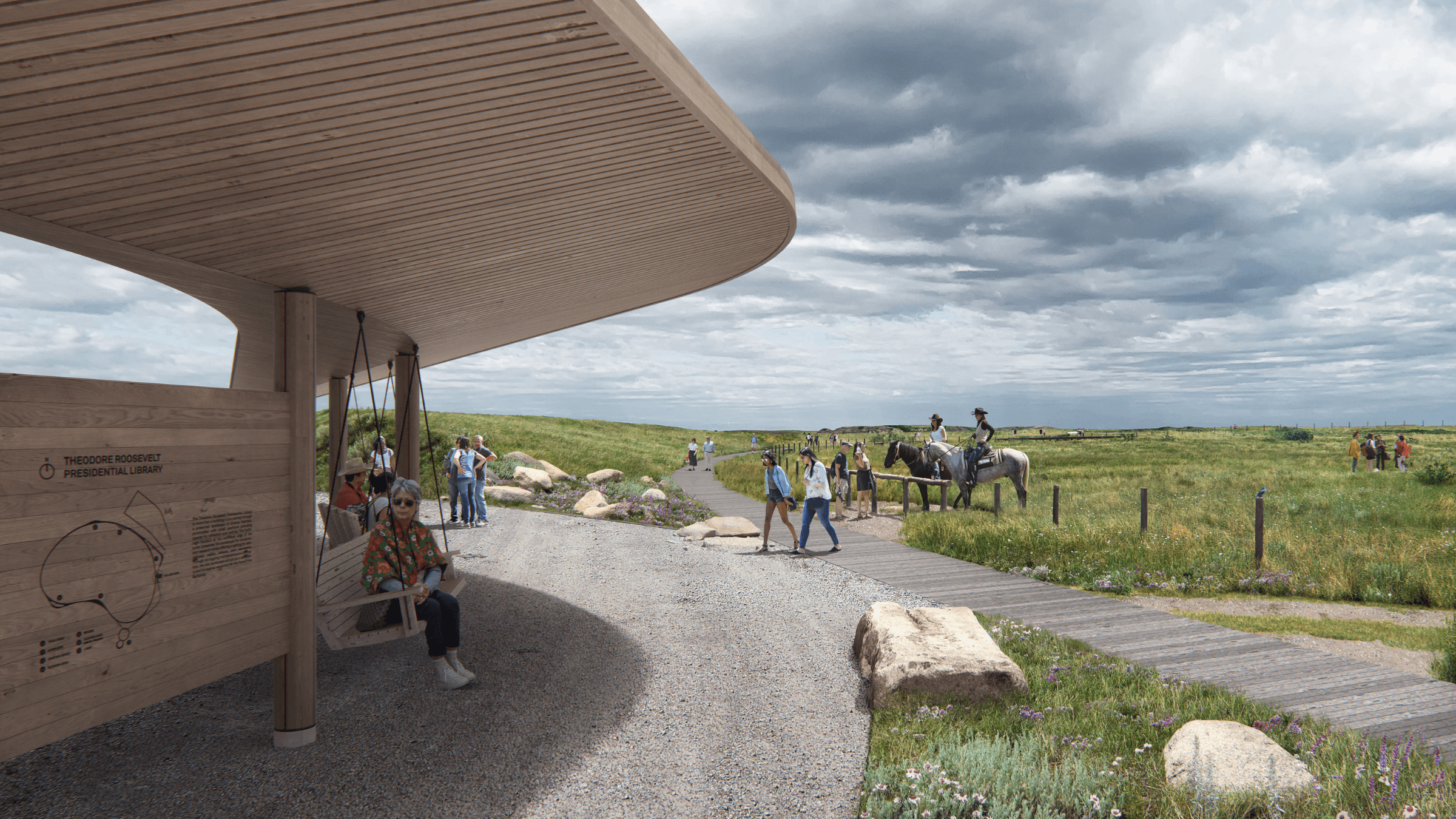
Work is well underway to prepare the site—set to include 50,000 square feet of exhibition space, a 300-seat auditorium, classrooms, and looping trails for hiking, mountain biking, and horseback riding—for its first visitors on July 4, 2026, as part of nationwide America250 celebrations.
But the physical grounds only tell half the story. Equally ambitious are its digital initiatives, soon to be unveiled, and staff’s forward-facing approach to artificial intelligence.
“We determined early on that we wanted to be a presidential library that leaned into AI,” says Matt Briney, Chief Communications and Marketing Officer.
© Theodore Roosevelt Presidential Library
Objectives
While construction began in the Badlands, the Theodore Roosevelt Presidential Library set out to build something else: an AI-powered foundation for its digital projects.
“We will have very limited collections on site,” Matt explains, “because [Roosevelt’s] papers were preserved by Harvard, Library of Congress, National Archives, and 18 other institutions. So, we wanted to create a presidential library that would be very different and future-forward.”
Centralizing these dispersed collections became the first priority. As a brand-new organization—with no existing systems for collections or digital asset management to dismantle—the Presidential Library had the rare advantage of starting from the ground up.
At the same time, artificial intelligence was emerging as “a very promising technology,” and the team saw an opportunity for early adoption.
Staff were keen to look into newer options on the market. Many hailed from long tenures in museum environments, with firsthand experience using—and facing the limitations of—legacy software.
“I came from a client-server type of application, and the ability to extend it into all of our digital offerings was extremely challenging,” says Matt.
The objective soon became clear: find a modern platform with AI features to support collections, digital assets, and public-facing initiatives. Already partnered with Microsoft, the Presidential Library focused its search among Microsoft partners in the DAM space.
“We looked at a variety of different systems,” Matt shares. And one in particular stood out during its first demo—Terentia.
© Theodore Roosevelt Presidential Library
Solution
Selecting Terentia proved an easy choice for the Theodore Roosevelt Presidential Library. “We just loved what we saw with the demo,” says Matt.
Powered by Microsoft Azure, Terentia is purpose-built for the heritage sector, supporting collections management, DAM, and digital exhibitions in one cloud-native platform. Its interface is configurable to any user role, record type, or workflow—and this inherent flexibility stood out.
“What really set Terentia apart is the modernization of the platform and its adaptability,” Matt explains. “The control we have over the back-end from the administration side, as well as the front-end public side, was really attractive.”
For a new foundation looking to scale, the platform’s modular design and API integrations also caught the team’s attention. “The fine details of the access control is great,” says Matt, “like being able to restrict collections data or limit the items that AI has access to.”
“It has the capabilities to adapt to other needs beyond even just collections. For instance, if I needed to have a separate digital asset management system for PR or Communications, those two worlds could reside.”
"The platform is just extremely flexible. It can adapt to any taxonomy or metadata formats we use—even if that changes by collection. There’s many systems where that’s not a possibility."
Matt Briney
Chief Communications and Marketing Officer
Implementation
The Theodore Roosevelt Presidential Library started implementing Terentia in January 2025.
Within a few days, the Terentia team’s attentive support had already made a big impression. “Compared to other DAM implementations, this was very hands-on,” Matt shares.
Led by Mylène Roussy, Project Manager, and Neal Bilow, CEO, the initial stages included a large-scale data transfer from the Theodore Roosevelt Center, a partnering institution at Dickinson State University.
“We were a small team and Neal and Mylène were able to help us plan and configure the database,” Matt says. “There was a lot of coordination with Dickinson State University, which had their own proprietary DAM system, and how to import digital assets from that.”
The collaboration proved so successful that it opened up new possibilities. “As a result of that great work and effort, I actually think we’re now going to become one system [with DSU], which is really spectacular.”
Presidential Library staff took to the platform quickly after initial training, with Terentia offering continuous training—100% free of charge—to anyone who wanted extra support.
Outcomes
With Terentia in place and an AI project grant from Microsoft in hand, the Theodore Roosevelt Presidential Library was ready to bring its digital initiatives to life.
“We were already using AI on site—thinking about ways to optimize our green and sustainability certifications, how we’re ordering food and supplies,” Matt explains.
Next up was harnessing AI in their museum efforts. “We wanted to be able to surface collections in more interesting ways,” he says.
Building a trusted AI digital repository
It’s no exaggeration to say the planned AI initiatives are set to reshape the modern visitor experience. And at the center is a private GPT called Campfire.
Matt explains how it works: “It’s a GPT engine that’s privately trained on an LLM built from our materials, as well as primary source materials from 33 different collections, 18 different institutions, and secondary sources like biographies to adjust for historical bias.”
Unlike AI tools that draw from the entire internet—like ChatGPT or Perplexity—Campire relies on Terentia as its trusted AI digital repository, ensuring every response is grounded in verified data. No external sources or unreliable data.
“The aim is to be able to ask [the GPT] any type of question and it responds as a virtual historian, then goes deeper into things and links into the collection assets,” Matt explains.
The beauty of the system is its scalability. For instance, a researcher can request all correspondence between Theodore Roosevelt and J.P. Morgan. While students working on a project could ask about TR’s life and get high-level answers with suggested prompts for more exploration.
The AI will extend into the physical Library as well. In an exhibit called Leadership in Action, visitors can step into the Cabinet Room and speak with an avatar of the president, powered by the same trusted GPT corpus.
As an exciting departure from written prompts, this AI experience is fully voice-activated—with the TR avatar speaking directly to the room and calling on guests by name, thanks to their RFID bracelets.
© Theodore Roosevelt Presidential Library
Transforming archival workflows with AI
Behind the scenes, artificial intelligence is already accelerating the team’s cataloguing work.
Take the Archivist App, created in a collaboration between Terentia, Microsoft, and OpenAI. Matt describes it as a “web interface” that combines Terentia’s OCR with AI to generate metadata and transcripts for records—all output reviewed by staff before entering the system.
“We didn’t fully trust AI,” Matt admits. “But what we’ve been shocked about is how good it has been.”
The Archivist App assigns confidence scores to its work, allowing users to filter and batch-approve records scoring above a certain threshold, while manually reviewing lower-confidence items. “The vast majority of transcripts and AI confidence numbers coming back are 90% or higher,” Matt says.
AI is also proving invaluable for tagging visual assets. Through AI facial recognition, the platform can help identify unknown people in photographs and videos, plus determine when and where they were taken and create links to related correspondences or events.
“It’s finding things that we as archivists maybe weren’t thinking about tagging,” Matt says.
“That ability to surface an image and tell you where it was and what other things are around that same time—that’s a huge advantage, which just doesn’t exist in current collections across different institutions.”
Solving a decades-long problem in no time
Matt points to his experience at another institution as a telling comparison. “They began digitizing and annotating their papers in 1969. That project will finish in 2030 and has cost $30 million so far,” he says.
Before AI, this was the unavoidable reality of delivering access to large-scale archives.
But with Terentia, the Presidential Library dramatically compressed that timeline—and without the hefty costs of long-term digitization and annotation.
“There’s no reason AI can’t generate those annotations on the fly,” Matt explains. “To be almost where they are in years, instead of decades, is huge.”
The quality holds up, too. Every AI response is source-linked and exportable as a PDF with full citations, making it ready for use by staff and external stakeholders like researchers, academics, and teachers.
It’s a win on multiple fronts: faster access, lower expenditure, and digital collections that begin delivering value years sooner.
© Theodore Roosevelt Presidential Library
Keeping AI ethical and responsible
Central to the Presidential Library’s approach is having both human oversight and full say over what data enters the system.
Terentia allows the team to mark sensitive materials as excluded from AI processing—such as personal letters from Roosevelt family members—and keep them safe from public access.
“There’s an ability to say this is off limits,” Matt explains. “We can have it in our collection, but don’t expose it to the web or the AI model. That access control is really huge.”
The Archivist App’s human review process also prevents inaccurate data from entering the trusted repository.
“We didn't want to feed bad data into the LLM because that’s really difficult to back out,” Matt says. When the AI doesn’t get something quite right, staff can make corrections that train the system to avoid repeating the same mistakes.
Following a human-in-the-loop approach increases staff’s confidence in the AI outputs while freeing them up from much of their previous busywork.
“We were expecting that AI might be able to help us a little bit—but AI is going to help us a lot. It’ll dramatically speed up the access to our records and collection items,” concludes Matt.
Future
As technology continues to evolve, so too will the projects at the Theodore Roosevelt Presidential Library.
“Just in the year we’ve been working on these projects, the leaps and bounds that AI has made and the capabilities are extremely promising,” says Matt.
“The fact that Terentia is a modern-built platform—and not moved from some legacy system—gives us the confidence that we’re going to maintain and use it for a very, very long time.”
Beyond the software itself, the partnership has proven equally valuable. “We’ve been very impressed by the enthusiasm from everybody at Terentia,” says Matt, “and the desire to continue to advance the platform.”
He continues: “It’s very easy, I think, for companies in this space to just build it once and rest on their laurels.”
“The fact that Terentia continues to host different gatherings of people, ask what their desires are, stay on top of trends, and make investments in the platform is great—because I know that we’ll benefit from what other customers are doing, too, in the future.”
© Theodore Roosevelt Presidential Library
"The product is so good that our IT team was able to run with it. But even for staff members, who are less technical and needed more assistance, it was great to have the resources and availability to support them, especially in the early days."
Matt Briney
Chief Communications and Marketing Officer
Key takeaways
Trusted AI digital repository
Built an LLM with verified data from 33 collections, 18 institutions, and secondary sources to power internal and public-facing projects.
Automated workflows
Sped up cataloging by training AI to generate metadata and assign confidence scores to its outputs, with most scoring 90% or higher.
Future-facing initiatives
Set the foundation for a long-term partnership by selecting a cloud-native platform with built-in AI tools, powered by Microsoft Azure.
Transform your digital initiatives with AI
Ready to build your own trusted AI digital repository? Discover how Terentia can accelerate your workflows while you keep full control over your data and collections.