
Image credit: Theodore Roosevelt Presidential Library
Behind Every Great AI Museum Experience Is a Trusted AI Digital Repository
Discover what the Theodore Roosevelt Presidential Library reveals about the infrastructure powering responsible AI in cultural heritage

Artificial intelligence just found its proving ground in GLAMP (galleries, libraries, archives, museums, and performing arts). The opening of the Theodore Roosevelt Presidential Library marks an important moment for cultural institutions everywhere.
The public conversation has focused on the most visible parts of the experience: Campfire, the AI-powered research guide, and the in-gallery Theodore Roosevelt avatar that allows visitors to interact with history in a new way.
Those experiences are exciting. They’re also only possible because of something less visible but equally important: trusted digital infrastructure.
At Terentia, our team is proud to support the Theodore Roosevelt Presidential Library as it builds a future-forward model for cultural heritage access. Here's a look at what building that foundation involved, and what it means for the future of AI in cultural heritage.
Key points
Great AI experiences begin with trusted collections infrastructure, not AI alone.
A trusted AI digital repository gives AI access to verified, institution-approved knowledge, instead of the open internet.
Responsible AI keeps staff in control, with a human-in-the-loop approach protecting metadata, context, and provenance.
The Theodore Roosevelt Presidential Library shows how trusted digital infrastructure can power both operational efficiency and engaging visitor experiences.
Rather than starting at “Which AI should we use?”, GLAMPs need to first ask: “Is our collections infrastructure ready?"
Case study: Setting a new standard for responsible AI in GLAMP
How can GLAMPs benefit from AI without infringing on trust? The Theodore Roosevelt Presidential Library answered that question for the sector:
Why AI needs a trusted digital foundation
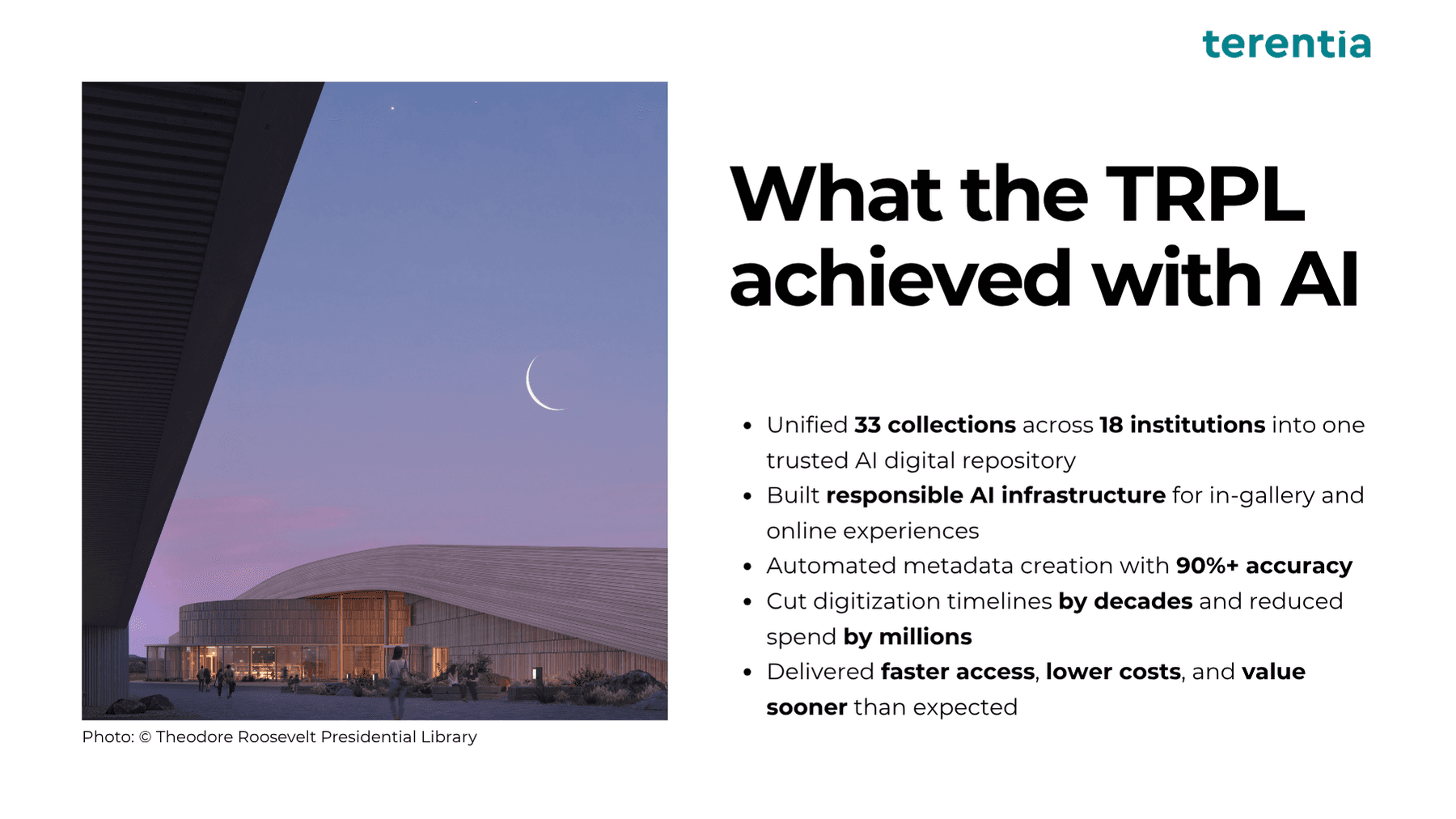
From the beginning, the Theodore Roosevelt Presidential Library faced a challenge shared by many institutions: how do you create meaningful public access when collections, documents, images, and related materials are distributed across many repositories?
The answer is not simply to add AI on top of fragmented data, but instead to create a trusted, AI-ready digital foundation.
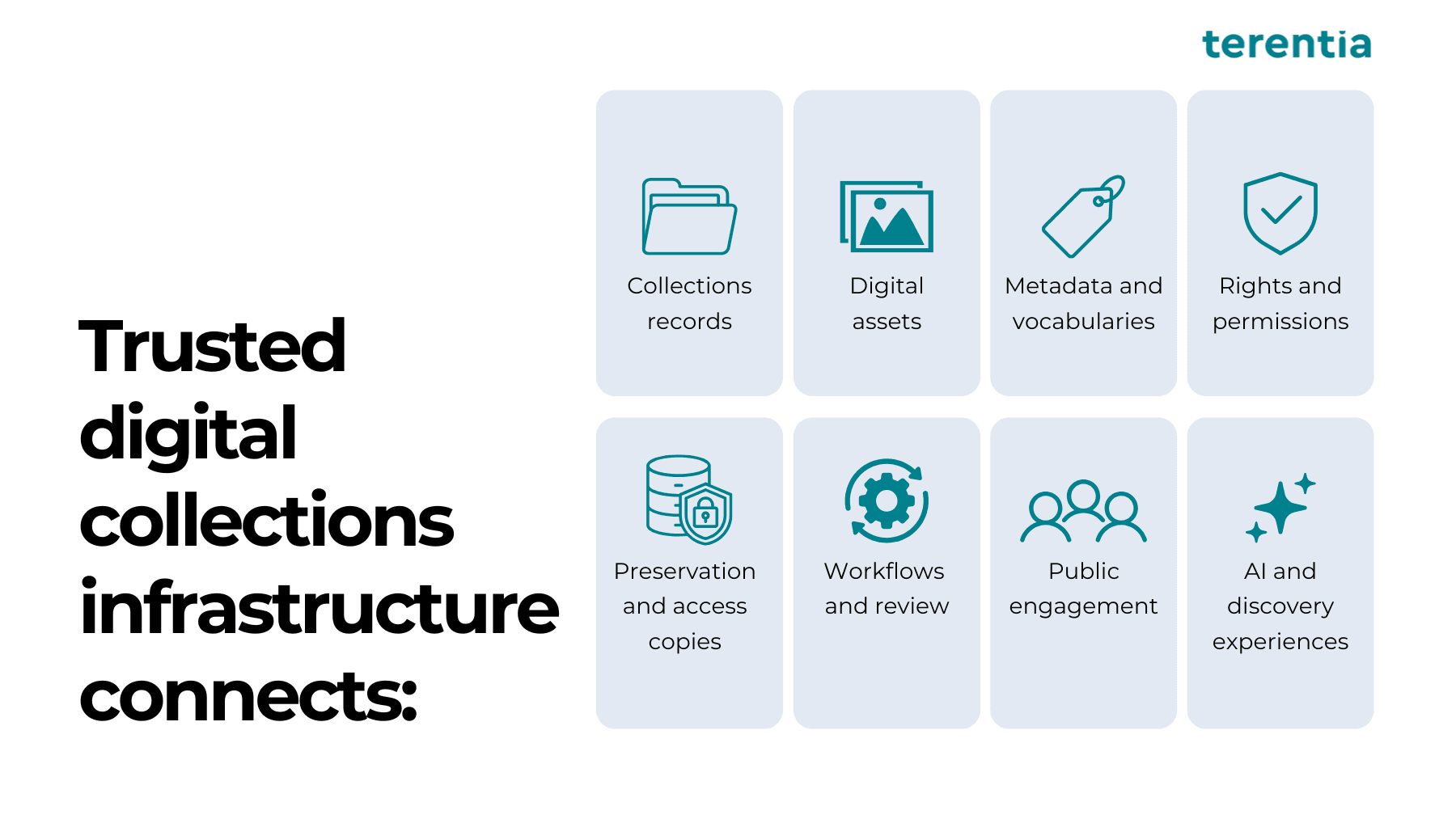
This foundation brings together several key elements that work together to support responsible AI in cultural heritage, including:
Unifying collections and digital assets
Preserving rich metadata and relationships
Managing access controls to protect sensitive materials
Supporting human review before AI-generated metadata or transcripts become part of the trusted record
Providing a reliable source of truth to build internal and public-facing initiatives on
Responsible AI starts with verified data
For museums and cultural institutions, there’s a distinction that matters. AI can make collections more discoverable, engaging, and useful to researchers, educators, students, and visitors. But responsible AI in the heritage sector must be grounded in verified institutional data.
To be used responsibly, AI must respect context, provenance, permissions, and curatorial judgment. Its value lies in helping GLAMP professionals do their work, not in replacing the expertise that makes collections meaningful in the first place.
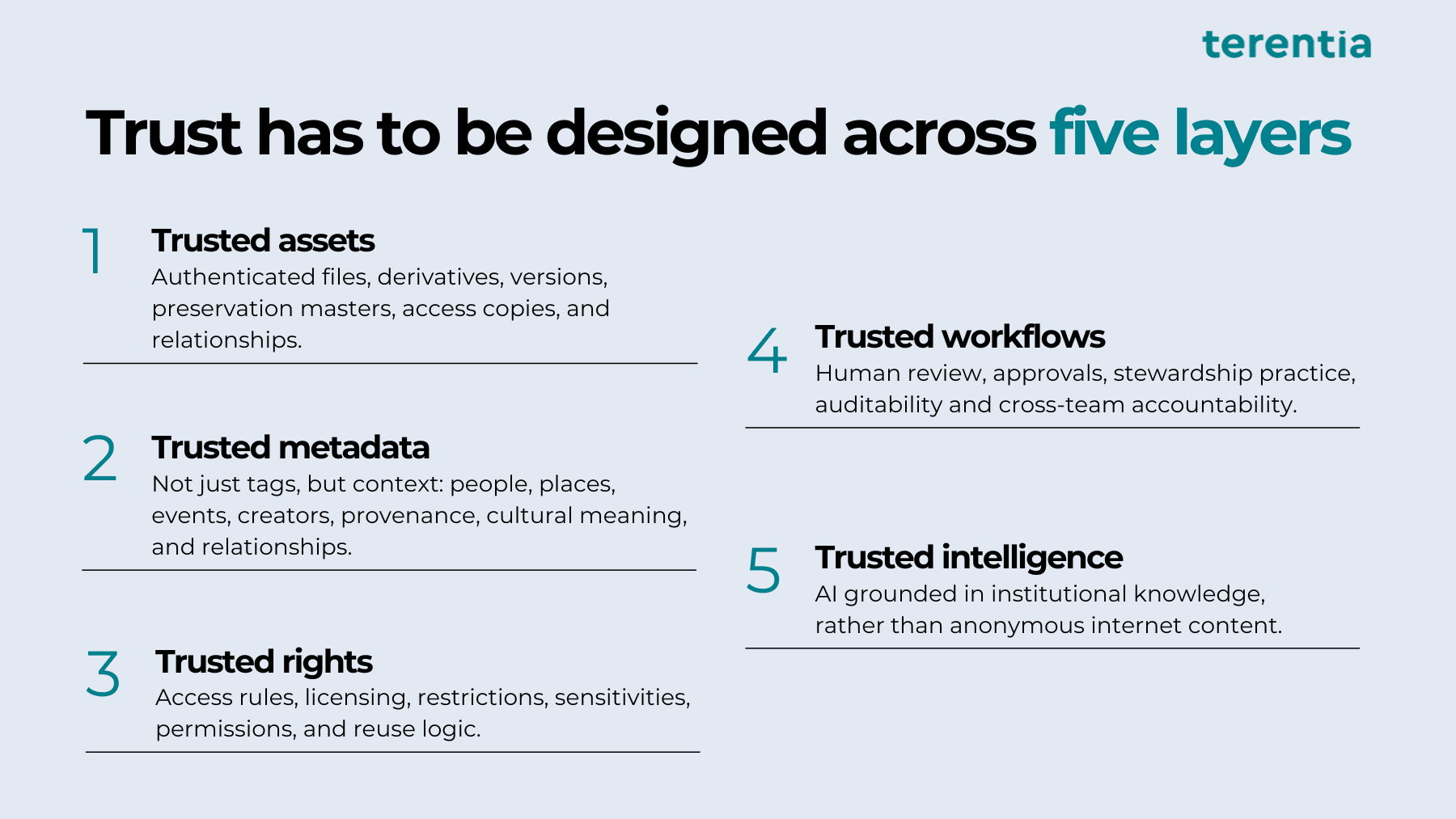
That’s why Terentia believes the next chapter of museum technology won’t just be defined by chatbots, avatars, or immersive interfaces. It’ll be defined by the trusted systems underneath them.
Get real insights in Responsible: AI for Museums: From Policy to Practice
It’s time to take a proactive approach to responsible AI. Find out what 290 of your GLAMP peers shared about the technology, governance gaps, and what needs to happen next.
One connected ecosystem for GLAMP
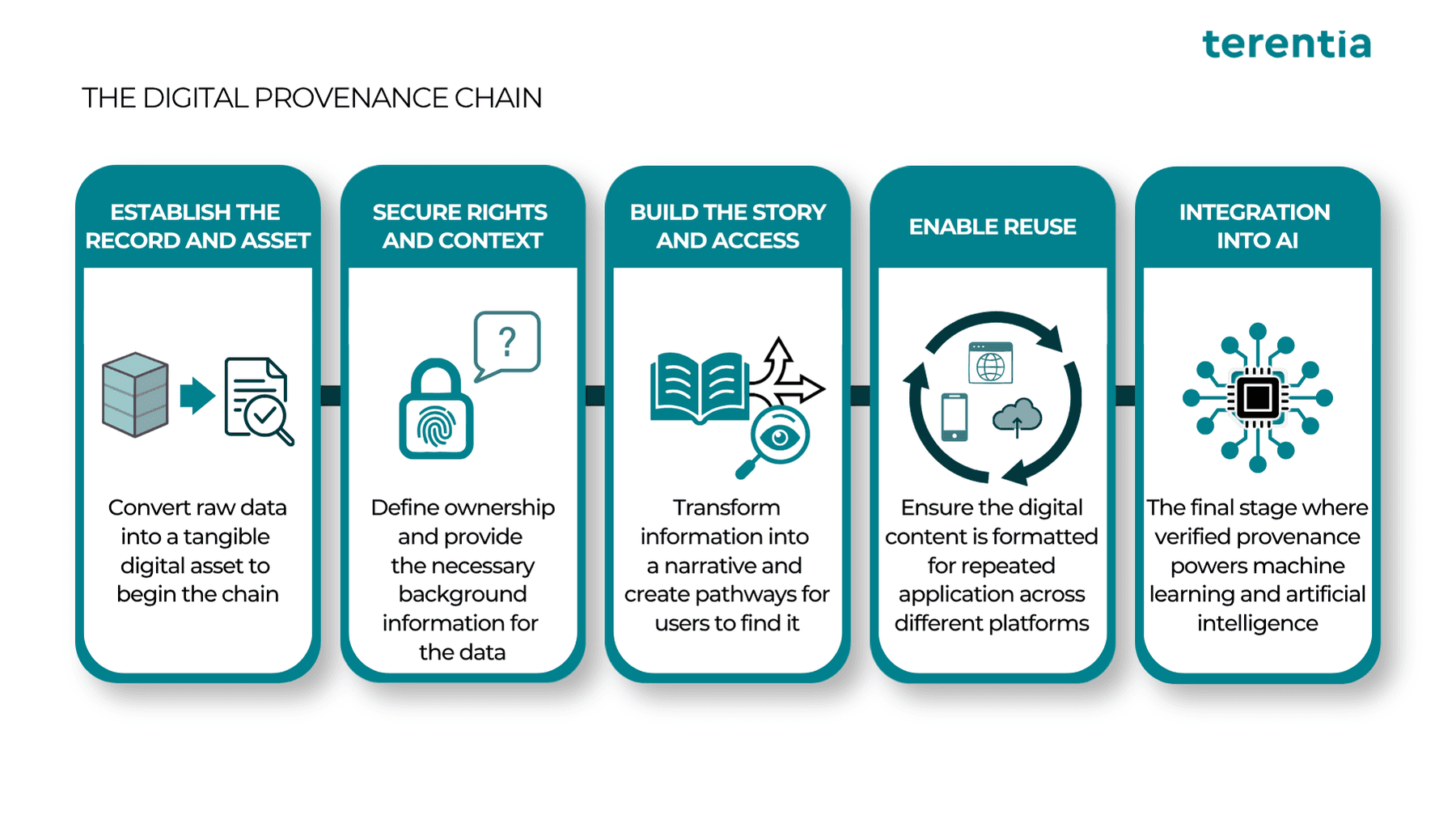
The Theodore Roosevelt Presidential Library shows what becomes possible when collections management, digital asset management, archival workflows, AI, and public engagement are treated as one connected ecosystem.
We are grateful to the Library for its vision and partnership, and we congratulate Microsoft’s AI for Good Lab and the many teams who contributed to this groundbreaking launch.
This moment is bigger than one institution. It’s a signal to the whole sector.
The AI question every institution should be asking
The future of AI in cultural heritage will belong to institutions that can combine innovation with trust—and that starts with a trusted AI digital repository.
For any GLAMP institution exploring AI-powered access, discovery, education, or visitor engagement, the first question shouldn’t be “Which AI tool should we use?”
It should be: “Is our collections infrastructure ready to support AI responsibly?” That’s the foundation Terentia helps institutions build.
How to build your own trusted AI digital repository
You don’t need to risk your data to innovate with AI. Terentia offers a secure platform to unify collections and digital assets, control access at every level, and safely prepare materials to interact with AI.
That means one system of record, with granular permissions you control and API integrations offering the flexibility to build out your own AI-powered experiences.
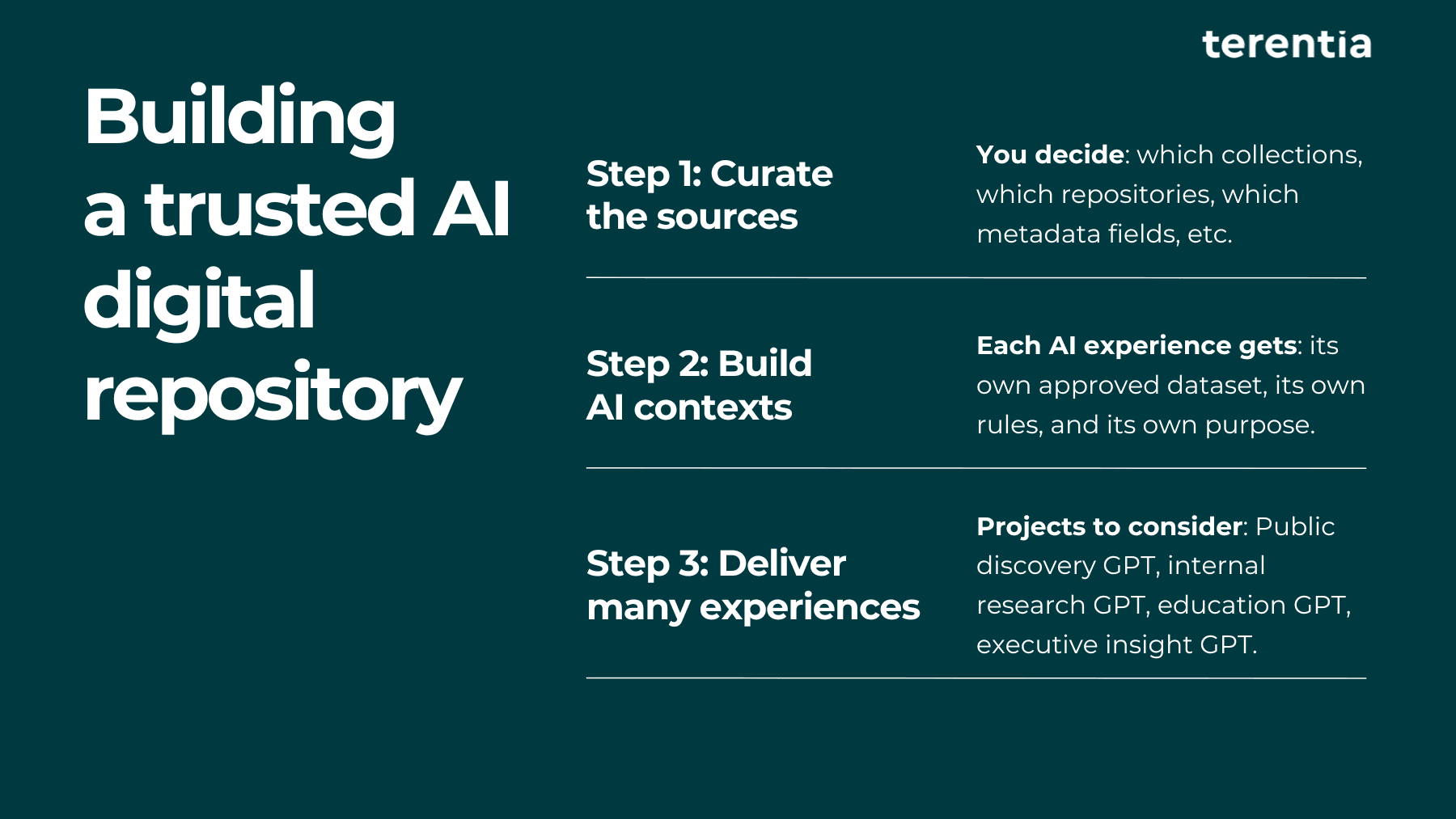
While the Theodore Roosevelt Presidential Library showcases what a large-scale archive can accomplish, Terentia delivers innovative solutions to all sizes of GLAMPs—at the same high standard of care.
What could your institution build on a trusted AI foundation? Start a conversation with our team to find out →
FAQs
What is a trusted AI digital repository?
A trusted AI digital repository is a secure, closed system where collections data, digital assets, and supporting materials are consolidated and reviewed by experts before becoming available to AI. Rather than relying on the open internet, AI systems draw exclusively from trusted institutional knowledge. Any AI-generated metadata, transcripts, or descriptions are then reviewed by humans before becoming part of the official record.
How does the Theodore Roosevelt Presidential Library use AI?
The Theodore Roosevelt Presidential Library uses AI to improve both internal workflows and visitor engagement. Internally, AI assists with metadata creation, helping to process digitized materials faster while keeping staff responsible for final approval. Publicly, visitors can interact with AI-powered experiences like Campfire and Leadership in Action, both of which draw from a trusted corpus of verified historical materials, rather than the open internet.
What vendors provide the institution’s AI tools?
The Theodore Roosevelt Presidential Library’s AI initiatives are built in collaboration between Terentia, Microsoft’s AI for Good Lab, and OpenAI.
What role does Terentia play at the Theodore Roosevelt Presidential Library?
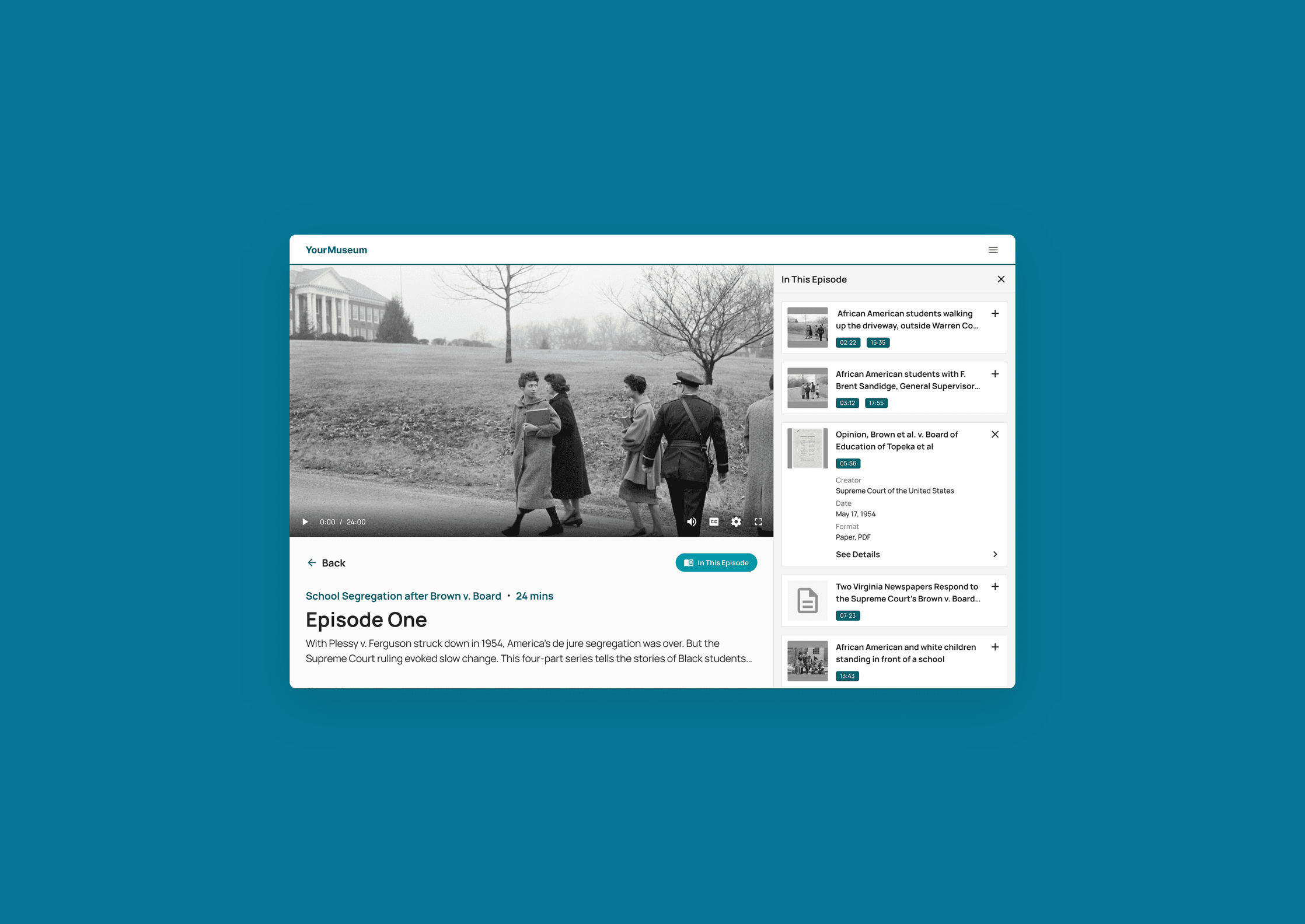
Terentia provides the collections and digital asset management platform that unifies the Library’s materials from 18 institutions into one trusted AI digital repository, with the access controls and API integrations that power AI initiatives like Campfire and the Roosevelt avatar.
What do these AI initiatives mean for other museums and archives?
Theodore Roosevelt Presidential Library is a real-life example of using responsible AI to accelerate internal work and engage the public, while keeping data secure and under full control of the institution. Their success shows that museums and archives can safely engage with AI, especially when partnered with trusted vendors like Terentia.
Browse our resources


Enjoyed the read?
Stay in the loop with Terentia. Join our mailing list for GLAM professionals to get new blogs, case studies, guides, and more great content delivered to your inbox.
